


The NIHR HealthTech Research Centre in Brain Health (HRC BH), hosted at King's College London, has partnered with members of the public from Black and South Asian communities to determine what is important to them in relation to memory and brain health. The project involves the co-design of the CARE app, a digital educational and engagement intervention.
Why is this work important?
Dementia represents a significant and growing public health challenge in the UK, with inequalities affecting dementia awareness, diagnosis, access to support, and research participation among ethnically diverse communities. An estimated 25,000 people from Black, Asian and minority ethnic communities in England and Wales are living with dementia, with this number projected to increase to 50,000 by 2026 and over 172,000 by 2050 (Alzheimer’s Society. 2022). Black African, Black Caribbean, and South Asian communities are among those experiencing barriers to accessing dementia information, recognising symptoms, engaging with healthcare services, and participating in research.
The CARE App (shown below) aims to address these inequalities by co-designing a culturally relevant and accessible digital intervention with communities to improve dementia knowledge, confidence in recognising when to seek support, and awareness of dementia services and research opportunities. As these populations are among the fastest ageing demographic groups, the burden of dementia within these communities is likely to increase. Evidence suggests that individuals from ethnic minority backgrounds may experience earlier onset dementia, often face delayed diagnosis and treatment, and are more likely to present to services at a later stage of illness, with higher rates of vascular and cardiovascular risk factors further elevating dementia risk.
Despite this need, ethnic minority communities remain underrepresented in dementia research and underserved in clinical services. Barriers identified include low awareness, stigma, distrust in research, and limited cultural competence within research and service delivery. National priorities, including the Dementia 2020 Challenge and Alzheimer’s Society, have called for urgent research focused on underrepresented communities. This project is needed to develop and evaluate a culturally appropriate intervention to improve dementia awareness, support earlier help-seeking, increase research participation, and ultimately reduce inequalities in dementia care and outcomes.
How did the NIHR HealthTech Research Centre: Brain Health help tackle this challenge?
The CARE app was developed in response to identified inequalities in dementia awareness, research participation, and knowledge of support services among ethnically diverse communities. Its development has been informed by ongoing engagement with the Community Ageing Research Across Ethnicities (CARE) Network, Public and Patient Involvement (PPI) co-development sessions, and findings from an ongoing scoping review. As part of a PhD project led by Kamara McLeish Evoloko at King's College London, community members have played a central role in shaping the app's content, design, and cultural relevance. Through collaboration with adults from diverse ethnic communities, including Black African, Black Caribbean, and South Asian populations, the project aims to develop a culturally appropriate digital intervention that improves dementia awareness, promotes research participation, and increases confidence in accessing dementia support services.
The CARE app has been informed by consultation with members of ethnically diverse communities, healthcare professionals, and researchers. Engagement with the Croydon Memory Service highlighted dementia prevention as a key priority, leading to the inclusion of educational content on modifiable risk factors to promote brain health and support earlier awareness.
What did HRC: Brain Health learn from conducting this work?
Input from PPI members highlighted a lack of awareness of dementia overall. Key needs and insights from the community included:
-
Clarification of terms - Members questioned the difference between dementia and Alzheimer’s disease.
-
Research transparency - People wanted to hear more about ongoing research, updates on research, and ways to interact with service use and dementia research.
-
Ease of use - Community members highlighted a preference for technology that is familiar and easy to use, requesting an “app that is straight[forward] and easy to use like the NHS app”.
-
Early advice - The group shared the need to improve awareness of dementia in ethnic communities and encourage seeking advice earlier.
By developing a culturally appropriate educational and engagement intervention, the Care App has the potential to help reduce stigma, improve knowledge of dementia symptoms and risk factors, and encourage earlier help-seeking and diagnosis as well as increase participation in dementia research among communities that are currently underserved and underrepresented. Greater inclusion will help ensure future dementia services, interventions, and policies are more equitable and culturally responsive.
People from ethnic minority communities at risk of or living with dementia, families and carers, through improved awareness and earlier support and healthcare professionals and researchers, by providing a better understanding of how to engage underserved groups all have the potential to benefit.
In the longer term, the project could contribute to reducing inequalities and provide a scalable model for community engagement that could be adapted for other underserved populations and other long-term conditions.
Where will the HRC: Brain Health take this research in the future?
Kamara Mcleish Evoloko, the study lead and PhD student has shared that “Facilitating the PPI sessions was an incredibly valuable experience. Hearing directly from community members highlighted the depth of lived expertise that formal research often overlooks. The trust participants showed and the stories they shared challenged me to think differently about how research can truly serve communities.”

The next phase of the project will focus on refining the CARE App by incorporating feedback from the Public and Patient Involvement (PPI) co-development sessions. The completed app will deliver a culturally tailored educational intervention designed to improve dementia awareness, research knowledge, and understanding of available support services among ethnically diverse communities.
Approximately 50 adults aged 40 years and over from diverse ethnic communities will be invited to take part in a 4-week feasibility study, where they will use the CARE App and complete the educational modules. The study will evaluate the app's usability and effectiveness in improving dementia knowledge, research understanding, and service awareness. Findings will help determine whether the CARE App has the potential to be implemented more widely as a scalable digital intervention to help reduce inequalities in dementia awareness and promote health equity.
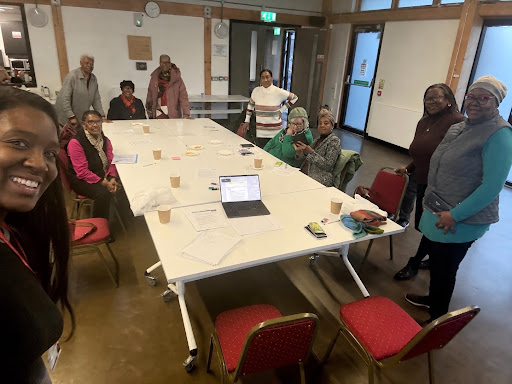
Members of the “60 Up Community Group” participating in a co-development PPI workshop for the CARE app.
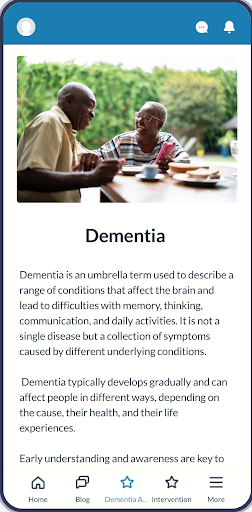
The image provides a preview of the CARE app currently in development.
The app has been co-developed with members of diverse communities and incorporates their ideas and feedback throughout the design process. Planned features include dementia awareness resources, information about dementia research, a local services directory, and a dedicated carers' support hub, alongside other tools designed to support individuals and families affected by dementia.
Acknowledgements
Thank you to the CARE Network for sharing valuable information in this project. As well as the NIHR HRCin Brain health hosted by South London and Maudsley NHS Foundation Trust, this project is also associated with AgeUK.
This research was supported by the UK Engineering and Physical Sciences Research Council (EPSRC) [Grant reference number EP/Y035216/1] Centre for Doctoral Training in Data-Driven Health (DRIVE-Health) at King's College London.