

Asthma remains a major health challenge for children and young people in the UK, with the highest asthma mortality rates in Europe for those aged 10–24. Despite around one million children receiving treatment, fewer than 25% have a personalised asthma action plan, highlighting a significant gap in self-management support.
The Digital Health Passport (DHP), developed by Tiny Medical Apps, is a digital tool that supports young people and families to better manage asthma. The NIHR HealthTech Research Centre in Paediatrics and Child Health (HRC PCH) played a central role in supporting co-design and development, bringing together patient insight, clinical expertise, and system partners to ensure the solution is usable, relevant, and scalable.
With over 5,000 users, the DHP has demonstrated measurable improvements in asthma control, patient confidence, and self-management skills. The app is also helping to address health inequalities, with over half of its users coming from the most deprived communities.
The successful clinical evaluation of the app demonstrates how digitally enabled self-management can improve outcomes, reduce pressure on services, and support a shift towards more personalised, preventative care. As such, an Early Value Assessment from the National Institute for Health and Care Excellence (NICE) recommends use of the DHP in the NHS, a significant benchmark for high quality, evidence-based healthcare resources.
Why is this work important?
Asthma is one of the most common long-term conditions affecting children and young people, yet outcomes in the UK remain poor. High rates of emergency admissions and preventable deaths highlight a system that does not consistently support effective self-management.
A key issue is a lack of accessible, engaging tools to help young people understand and manage their condition in everyday life. Without this support, many rely on reactive care, leading to avoidable exacerbations, hospital visits, and disruption to education and wellbeing.
Tiny Medical Apps aimed to address this gap by developing a digital solution that empowers young people to take control of their asthma. The HRC PCH ensured that the technology was shaped by real patient need, tested with end users, and supported by evidence to enable adoption.
This intervention reduces reliance on traditional models of care that do not fully engage young people, contributing to ongoing health inequalities and system pressures.
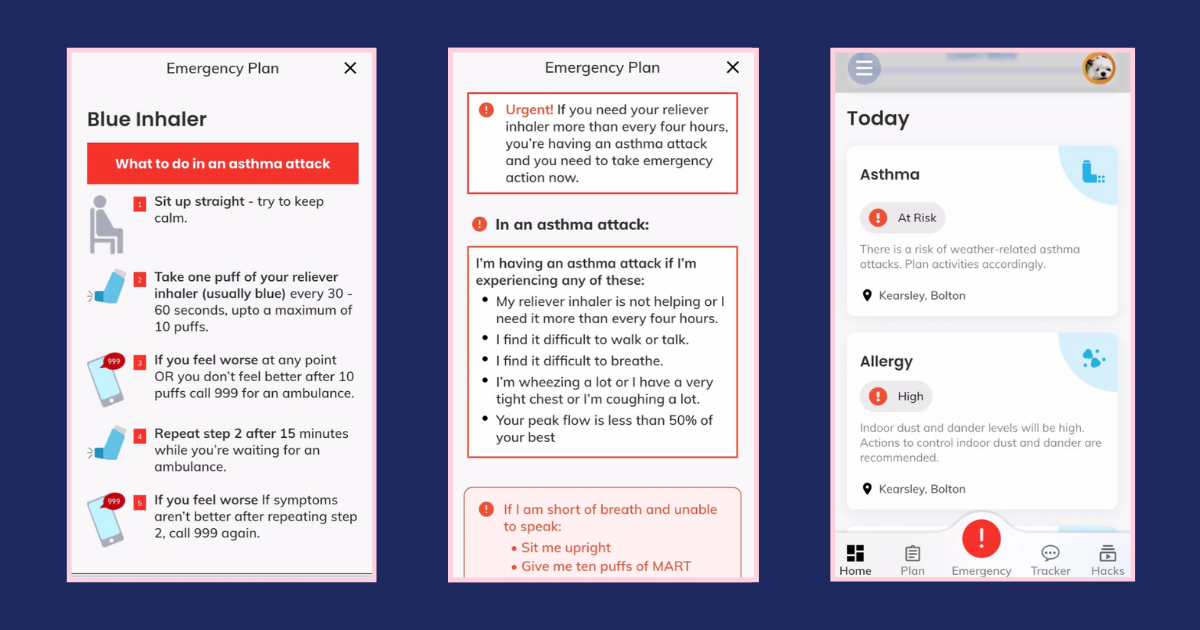
The app educates children and young people on what to do in an asthma attack and provides air quality updates and how this might affect the condition.
How is the NIHR HealthTech Research Centre: Paediatrics and Child Health helping to tackle this challenge?
The Digital Health Passport for Asthma was created by Tiny Medical Apps, and a collaboration with the NIHR HRC PCH supported further development and expansion of the app, led by the team behind the Long-Term Conditions Theme at Sheffield Children's.
The HRC PCH collaborated on funding applications, coordinated patient and public involvement and engagement (PPIE) workshops, and provided project management support. Workshops with children, young people, and families validated the unmet need and ensured the app’s design reflected real-world preferences and challenges.
This co-design approach ensured that the app was accessible, engaging, and relevant to its target users. The HRC also supported evaluation activities, enabling independent assessment of usability, effectiveness, and potential system impact.
The project has been supported with multiple funding streams, including NHSX and SBRI Healthcare, and further strengthened through participation in the UP Ventures Children and Young People’s HealthTech Accelerator, supported by the HRC PCH.
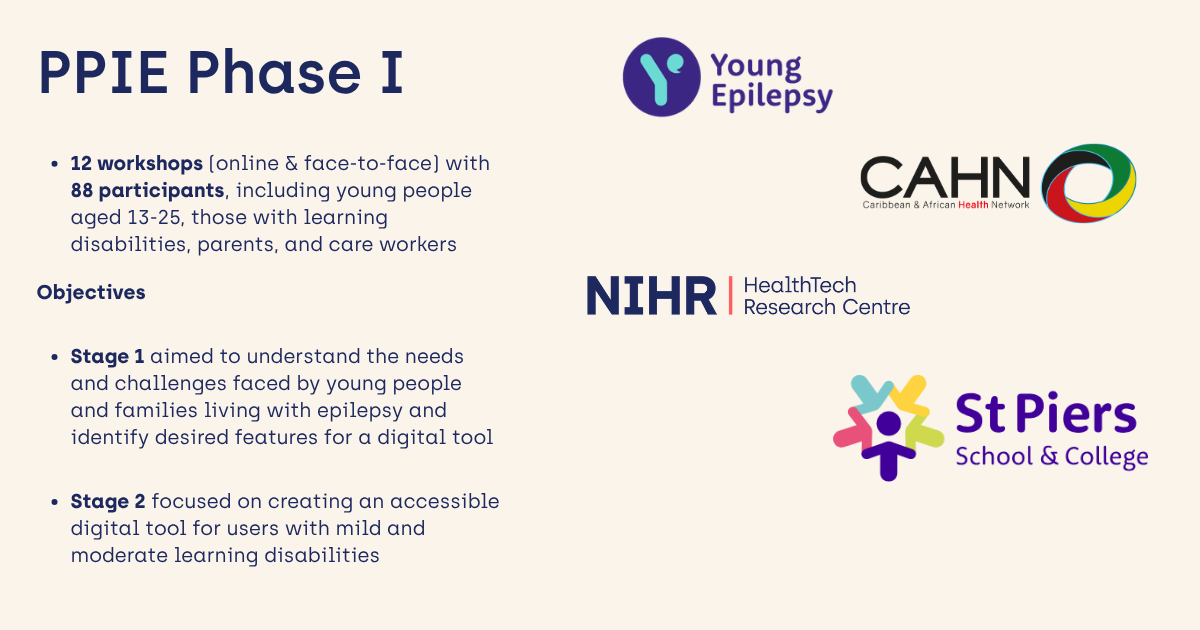
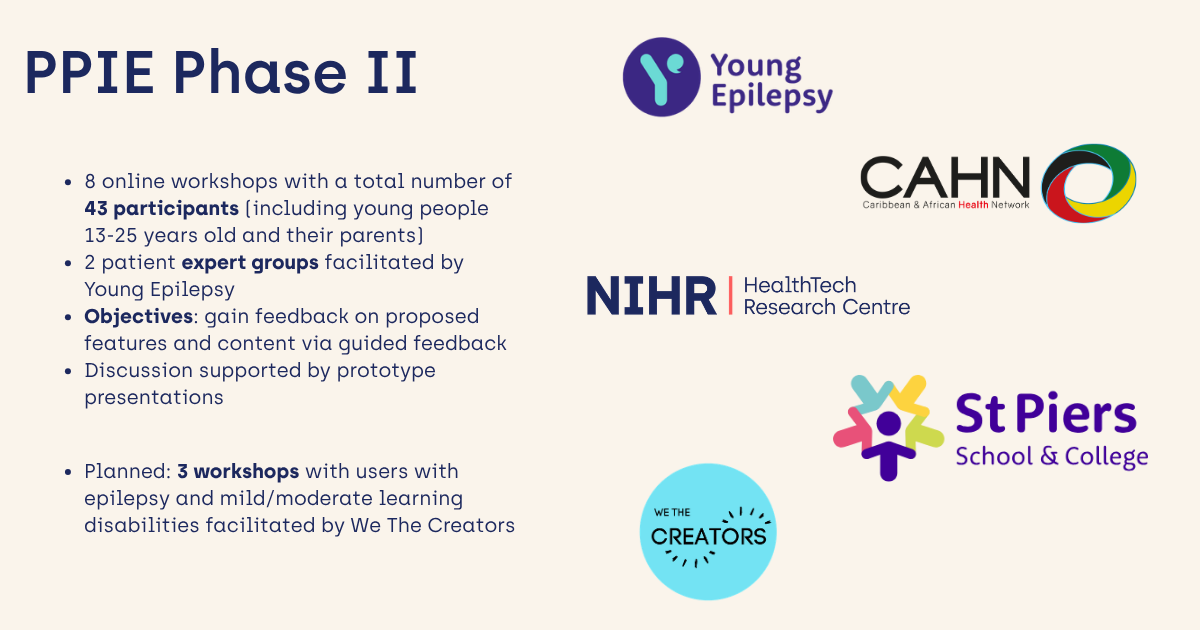
The PPIE process, supported by the NIHR HRC PCH.
Professor Heather Elphick, Clinical Lead for the NIHR HRC PCH Long-Term Conditions in Childhood Theme, led on the development of an online video-based educational resource for young people living with asthma, Moving on Asthma (MoA), which has been integrated into the DHP for Asthma. MoA empowers young people to educate themselves about their condition, self-advocate for their health and wellbeing, and transition to managing their healthcare independently. The addition of this educational resource has enhanced the level of support the DHP provides and it addressed the significant gap in support available for young people transitioning from paediatric to adult services. Recently, MoA has been recognised as a ‘trusted information creator’ and awarded PIF TICK certification, the UK’s only assessment quality mark for print and online health and care information which ensures the content is trusted, evidence-based, and accessible.
What progress has the project made to date, and what outcomes have been achieved?
An independent evaluation by UCLPartners demonstrated clear and measurable benefits of using the Digital Health Passport.
The app showed statistically significant improvements in Asthma Control Test scores within 3 months of use. It also improved patient activation, including knowledge, skills, and confidence in managing asthma. These are key predictors of better long-term outcomes, including reduced exacerbations and hospital admissions.
Users also reported improved ability to manage their condition in daily life, including fewer disruptions to school or work.
Importantly, the app successfully engaged a diverse user base, with 52% of users coming from the two most deprived Index of Multiple Deprivation quintiles. This demonstrates its accessibility and relevance in addressing health inequalities.
The impact of the Digital Health Passport is being seen across patients, the healthcare system, and the wider economy.
For patients and families, the app provides a practical and accessible way to build confidence and take control of asthma management. Young people are better able to understand their condition, recognise symptoms, and take action earlier, reducing the risk of severe episodes. Independent evaluation by UCLPartners showed statistically significant improvements in asthma control within three months, alongside increased knowledge, skills, and confidence in self-management. These improvements are strongly linked to reduced exacerbations and hospital admissions, as well as better attendance at school and work.
For the health and care system, improved asthma control has the potential to reduce demand on services. Fewer emergency appointments, hospital admissions, and face-to-face reviews are anticipated as self-management improves. Health economic analysis estimates a potential return on investment of £8.21 for every £1 spent over three years, reflecting more efficient use of NHS resources.
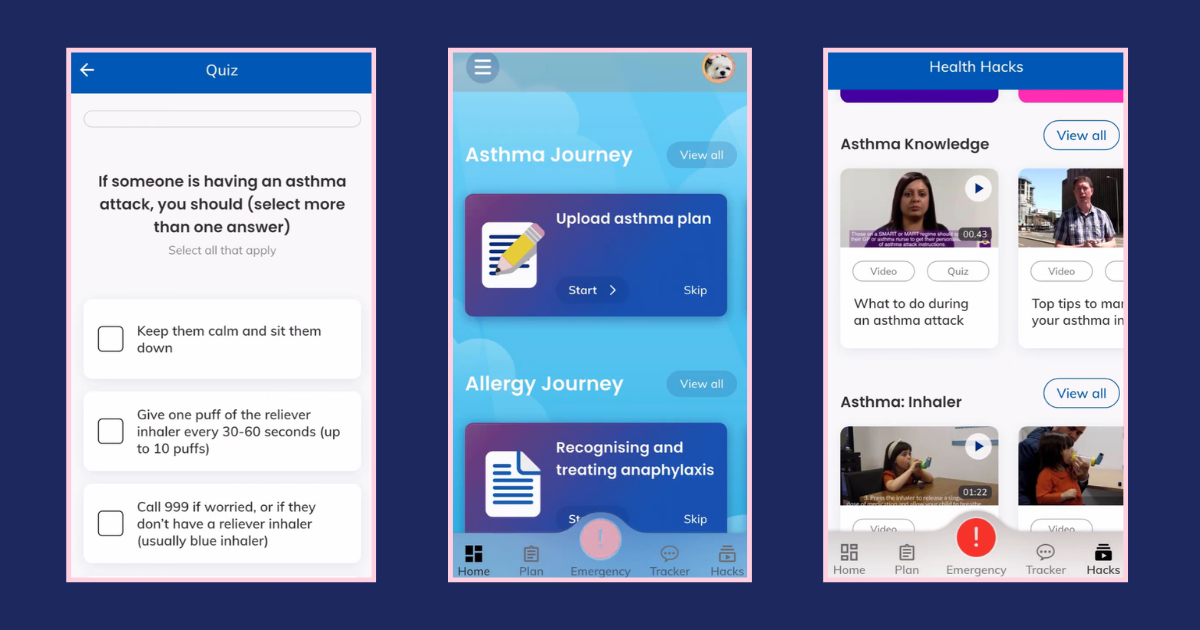
The app offers quiz questions, health hacks and enables children and young people to fill out their own asthma plans.
The app has also delivered clear economic and system-level impact. The project has leveraged over £1.35m in funding to support development, evaluation, and scale-up, including £498,212 through an NHSX Digital Health Partnership Award, £67,000 in NHSX ITP funding, and £488,525 from SBRI Healthcare for the Making Young People’s Asthma Self-management Smarter (MYPASS) project. Building on this success, a further £799,725 has been secured from SBRI Healthcare to extend the Digital Health Passport to support young people with epilepsy.
Importantly, wider NHS adoption is already underway. Three Integrated Care Boards have independently funded the service beyond the initial programme period, demonstrating confidence in its value within real-world NHS settings. The innovation has also been selected for the UP Ventures Children and Young People’s HealthTech Accelerator, supporting its progression through the NHS and into international markets.
At a population health level, the app is helping to address health inequalities, with over 5,000 users, 52% of whom are from the most deprived communities. This demonstrates its ability to reach underserved groups and provide equitable access to self-management support.
The digital technology aligns with key strategic priorities, including the shift towards prevention, personalised care, and digital transformation. It also supports economic growth by enabling a UK-developed innovation to scale within the NHS and beyond, creating opportunities for wider adoption and impact.
What has the HealthTech Research Centre learned, and where do we go from here?
This case study highlights the importance of co-design and early patient involvement in developing digital health solutions. By working directly with young people, the project ensured that the technology was both usable and meaningful in real-world settings.
The HRC PCH played a critical role as a connector, bringing together innovators, patients, clinicians, and funders to support development and evaluation. This integrated approach reduced the risk of the product not being as effective as it has been and accelerated progress toward adoption.
A key learning is the importance of combining clinical evidence with user engagement and system alignment. Digital tools alone are not enough; they must fit within standard care pathways and meet the needs of both patients and healthcare professionals.
Looking ahead, the functionality of the app is now being expanded to other conditions. Building on the success of the DHP for Asthma, the partnership between NIHR HRC PCH and Tiny Medical Apps has continued and together they have secured funding from SBRI to expand the DHP to include content for young people living with epilepsy. This award supported a collaboration with the charity Young Epilepsy to co-design content alongside young people. The DHP for Epilepsy includes features such as a seizure and symptom diary, medication reminders, emergency action plans, mental health support, and more.
This demonstrates both the scalability of the model and the ongoing role of the HRC in supporting innovation that delivers real-world impact.
Additional information
In 2025, Tiny Medical Apps was one of 12 start-up companies involved in the Children and Young People ‘KidsUP’ HealthTech Accelerator, delivered in partnership with Sheffield Children’s, PXN, and local authorities in South Yorkshire. The NIHR HRC PCH team was instrumental in the development and delivery of this accelerator programme by:
- Offering mentorship to the companies throughout the 12-week programme
- Setting up the Young Advisors Panel, which recruited and upskilled 10 students from the Sheffield Olympic Legacy Park University Technical College (SOLP UTC) to guide and shape the start-up companies’ innovation journeys.
- Providing feedback and advice by contributing to the judging panel.
Later in 2025, five of the companies involved were invited to present at the 4th Child Health Technology conference, hosted by the NIHR HRC PCH, as part of a session on the National Centre for Child Health Technology, based at the SOLP, where they had the opportunity to showcase their innovations to a global community.
Who helped make this work possible?
This work was delivered through collaboration between the NIHR HealthTech Research Centre in Paediatrics and Child Health (HRC PCH) and industry partner Tiny Medical Apps. For more information, read the full case study on their website.
The HRC PCH provided strategic, clinical, and operational support, including funding development, coordination of patient involvement activities, and project management. Tiny Medical Apps led the development and delivery of the Digital Health Passport for Asthma and Epilepsy.
The evaluation of this app was supported by SBRI Healthcare and NHSX funding, with further backing from Integrated Care Boards that have commissioned the service. Additional support has been provided through the UP Ventures Children and Young People’s HealthTech Accelerator, supported by the HRC PCH.
The current phase of work includes collaboration with Young Epilepsy to extend the model to new conditions, demonstrating the broader applicability of this approach.