

Neurotechnology has the potential to transform how neurological conditions are understood and treated. But if technologies are developed and tested using unrepresentative groups, they risk overlooking the needs of the very people who could benefit from them.
Neurotech4All, led by Professor Mahnaz Arvaneh at the University of Sheffield and funded by the Advanced Research + Invention Agency (ARIA), is working to address these inequalities. Bringing researchers, healthcare partners and community members together, the project is identifying barriers to participation in neurotechnology research and access to treatment, while developing practical ways to make innovation more inclusive.
Through 18 months of community engagement and co-design, the NIHR HealthTech Research Centre: Long-term Conditions (Devices for Dignity) is helping put community voices at the centre of more inclusive neurotechnology research, working with Community Research Champions in Sheffield’s Congolese, Somali and South Asian communities to develop resources that can help researchers engage more effectively with underrepresented groups.
The project aims to ensure that the development of future neurotechnologies reflects the people they are intended to serve.
Why is this work important?
Neurotechnologies, which interact with the nervous system to measure or influence brain activity, offer opportunities to improve the diagnosis and treatment of neurological conditions. However, their benefits may not be shared equally if research and development fail to reflect the diversity of the population.
Physical characteristics such as hair type, protective hairstyles, skin tone, head size and skull thickness can affect how some technologies fit, feel or capture signals. Hormonal differences may also influence measurements. Alongside these design challenges, people from minority ethnic communities can face practical, cultural and social barriers to taking part in research or accessing treatment.
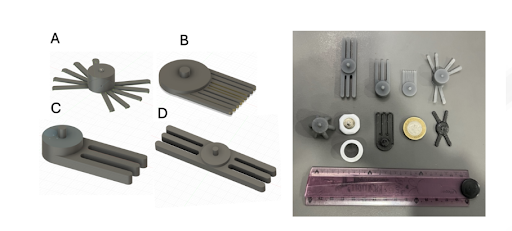
EEG electrode design prototypes for use on different hair types
When certain groups are underrepresented in research, the evidence used to develop technologies may not reflect their needs or experiences. This risks creating devices and treatments that work better for some people than others, reinforcing existing health inequalities.
Neurotech4All is addressing this challenge by looking beyond recruitment numbers alone. Its work explores how research can be designed more inclusively, how technologies can better accommodate different users, and how access to neurotechnology can become more equitable.
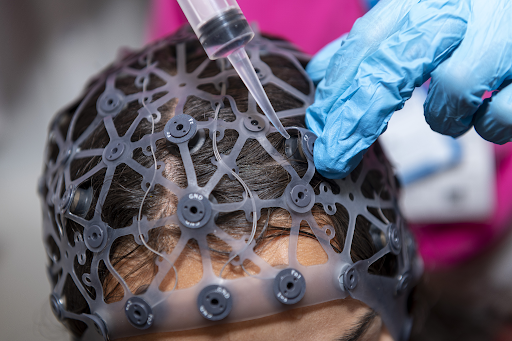
Neurotech4All is investigating how differences in skin tone, hair, skull anatomy and other characteristics can affect neurotechnology performance, with the aim of making these technologies work better for everyone.
How is the NIHR HealthTech Research Centre: Long-term Conditions (Devices for Dignity) helping to tackle this challenge?
Devices for Dignity has contributed expertise in patient and public involvement and engagement (PPIE), helping connect researchers with communities and support a more inclusive approach to neurotechnology research.
Lise Sproson, (PPIE Lead, Devices for Dignity) and Dr Dan Blackburn, Consultant Neurologist, (SITraN and University of Sheffield) have co-led the community involvement and engagement, working alongside Community Research Champions in Sheffield’s Congolese, Somali and South Asian communities. The team has used focus groups, workshops and semi-structured interviews to understand the barriers people experience when accessing neurotechnologies and participating in health research.
This approach puts community perspectives at the centre of the work, rather than asking people to respond to solutions that have already been designed. Community members help identify priorities, challenge assumptions and shape resources that are relevant to their experiences.
The work is based around principles of reciprocal benefit to the research team and to the communities involved. Workshop plans are co-developed with community Research Champions who are known and respected within their communities and the venues and catering are provided by each community and reimbursed by the project.
In this way, people who are often underrepresented in health research can meet in spaces familiar to them, responding to invitations from people they know, and eat food they enjoy.
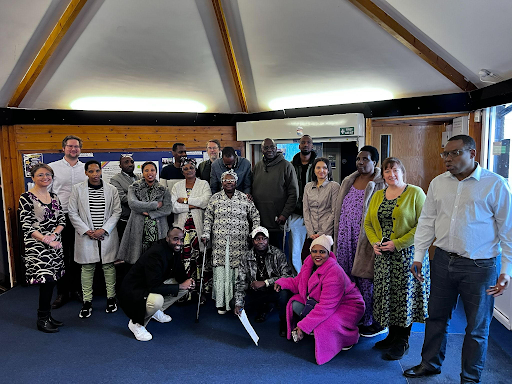
End of workshop photo with Inspire the Nations and Sheffield's Congolese community.
What progress has the project made to date, and what outcomes have been achieved?
The project has completed 18 months of practical co-design, working with communities to develop approaches and guidelines that make neurotechnology research more accessible and representative. During these 18 months 6 workshops have been completed across 3 different community groups. With the help of diverse community members and faith leaders, the team has developed participation toolkits, culturally appropriate recruitment materials and guidance for researchers. The workshops also highlighted the time it takes to build trust and the value of involving communities early, when they can shape how studies are planned and run.
The team has also drafted recommendations for designing neurotechnology that works for a wider range of people. For example, some sensors used to record brain activity can be harder to fit over thick or tightly curled hair, making it more difficult to get a reliable recording. The team has shared the draft recommendations with clinicians and researchers for feedback.
To better understand people’s perspectives on deep brain stimulation (DBS), the team surveyed 261 people living with Parkinson’s disease, including people who had undergone the procedure and people who had not. Among respondents who had not undergone DBS, women reported greater concerns than men about being awake during surgery and about possible effects on speech and mood. Women and men reported similar willingness to consider treatment options beyond medication. The findings suggest that tailoring pre-surgical counselling to the concerns people raise could better support their decisions. Alongside the survey, the team is working with Sheffield Teaching Hospitals to study anonymised clinical records and examine where differences in access may arise during assessment for DBS.
The project was shortlisted as a finalist in the Health Tech Newspaper Health Tech Awards 2026, in the category for digital inclusion and improving health inequalities. This recognition reflects the importance of tackling inequalities in neurotechnology research and ensuring that advances in the field benefit a wider range of people.
The Neurotech4All team has also expanded its community engagement through local media. In October 2026, a member of the team participated in an interview on Sheffield Live's 60 Minutes in Arabic programme, highlighting the importance of involving underrepresented communities in Sheffield in scientific research, particularly neurotechnology. The discussion focused on raising awareness of research opportunities, addressing barriers to participation and encouraging greater involvement from diverse communities. This outreach complements the project's community workshops and reflects its commitment to building trust, strengthening community relationships and making neurotechnology research more inclusive and accessible.
What has the HRC learned, and where do we go from here?
Neurotech4All highlights that inclusive innovation involves more than making technologies available to a broader population. It requires researchers and developers to consider who is represented in their evidence, whose experiences shape design decisions, and what might prevent people from participating in research or accessing treatment.
It also demonstrates the value of working in partnership with communities over time. Trusted relationships and meaningful involvement can help researchers understand barriers they might otherwise overlook, and develop solutions grounded in people’s lived experiences.
These lessons have implications beyond the project itself. By translating community insights into practical resources and recommendations, Neurotech4All aims to help researchers, innovators, clinicians, funders, policymakers and regulators make more inclusive decisions throughout the development and adoption of neurotechnologies.
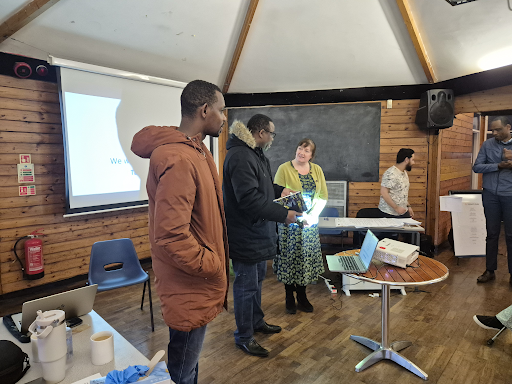
Neurotech4All’s first workshop with Sheffield’s Congolese Community, introducing themselves, the research and why it matters.
Outputs and next steps
Neurotech4All has established a public website and produced a video explaining why diversity and inclusion matter in neuroscience and neurotechnology research. These resources make the project’s aims and community engagement work accessible beyond academic audiences.
The team has also published its community-based research with Somali participants: Mohamed, M. A. A., et al. (2026), ‘Fostering inclusive participation in non-invasive neurotechnology research: a community-based study with an underrepresented population’ in Frontiers in Human Neuroscience. This paper, which was co-authored with members of the Israac Somali Community Association community, provides a published example of combining community engagement with practical EEG and fNIRS research outside conventional laboratory settings.
The team has also shared its work through scientific, community and policy-facing venues, including contributions to the UK Nuffield Council on Bioethics BCI Working Group and the ‘Diversity in BCI: Why is it important?’ workshop at the 10th Graz BCI Conference in September 2026. Further dissemination includes Professor Arvaneh’s University of Essex BCI-NE webinar, ‘Beyond Accuracy: Building Inclusive BCIs and Neurotechnologies for Diverse Communities’ (24 June 2026), engagement at Parkinson’s UK Par-Con 2025, and coverage in the EPSRC Healthcare Technologies Newsletter. The team has also taken part in the EEG101 seminar, ‘Strategies and barriers to increase diversity of studied populations in EEG research’, that took place on the 20 November 2026.
In January 2027, the team plans to host the first UK National Forum on Inclusive Neurotechnology and Community Partnership. Bringing together researchers, technology developers, clinicians, funders and community champions, the forum will create an opportunity to share learning, establish lasting partnerships and agree priorities for more inclusive neurotechnology research and development.
Another key deliverable is a guidance resource for researchers, clinicians and funding organisations, co-developed with communities. It will provide practical recommendations to support more inclusive research practices in neurotechnology, helping teams put the project's learning into action.
Together, these outputs and contributions to research practice and the next steps aim to extend the project's impact beyond its immediate partnerships, supporting a more representative and equitable approach to neurotechnology research and, ultimately, access to care.
Who helped make this work possible?
Neurotech4All is led by Professor Mahnaz Arvaneh at the University of Sheffield and funded by the Advanced Research + Invention Agency (ARIA).
Project partners include the University of Sheffield, Devices for Dignity, Sheffield Teaching Hospitals NHS Foundation Trust, NIHR Sheffield Biomedical Research Centre (BRC), who have provided clinical neurology expertise to help shape the project and workshops, and The Walton Centre NHS Foundation Trust. Community Research Champions and participants from Sheffield’s Congolese, Somali and South Asian communities have been central to identifying barriers and co-developing solutions.
Their contributions are helping ensure that the future of neurotechnology is shaped not only by scientific and technical progress, but also by the experiences and priorities of the people it is intended to benefit.