

Memory problems are common following brain injury and can make everyday activities, conversations and appointments difficult to manage. While digital technologies have the potential to support people living with memory impairments, their success depends on being designed around the needs of the people who will use them.
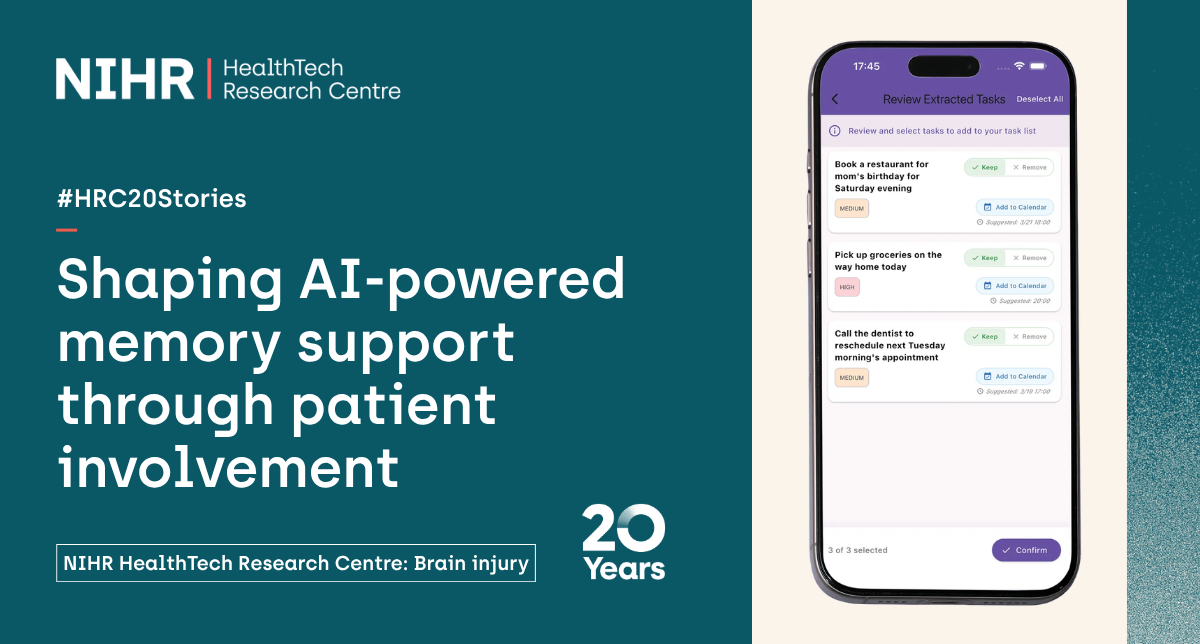
Recallify is an AI-powered app that helps people capture conversations, organise information and generate clear summaries to support memory and day-to-day independence. After winning the Mike Barnes Innovation Award at the 2024 UKABIF Summit, the NIHR HealthTech Research Centre: Brain Injury (HRC BI) supported the next stage of the app's development through Patient and Public Involvement and Engagement (PPIE).
Using its established network of patients and carers, HRC BI designed and delivered usability workshops that enabled people with lived experience to test the app, provide feedback and directly influence future development. This collaboration helped refine key features, improve accessibility and shape the design of a larger clinical evaluation, demonstrating how meaningful patient involvement can accelerate the development of digital health innovations.
The current study, that initial PPIE supported, is a feasibility and acceptability of Recallify in adults recovering from Acquired Brain Injury. This was funded by the NIHR Invention for Innovation (i4i) programme, and is running between January 2026-January 2027.
The app was founded by neuroscientist Dr Sarah Rudebeck, whose work focuses on memory and cognitive function. Since working with HRC BI, the innovation has continued to gain national recognition, including Dr Rudebeck receiving an Innovate UK Women in Innovation Award for her work in developing AI-powered support for people with memory impairments.
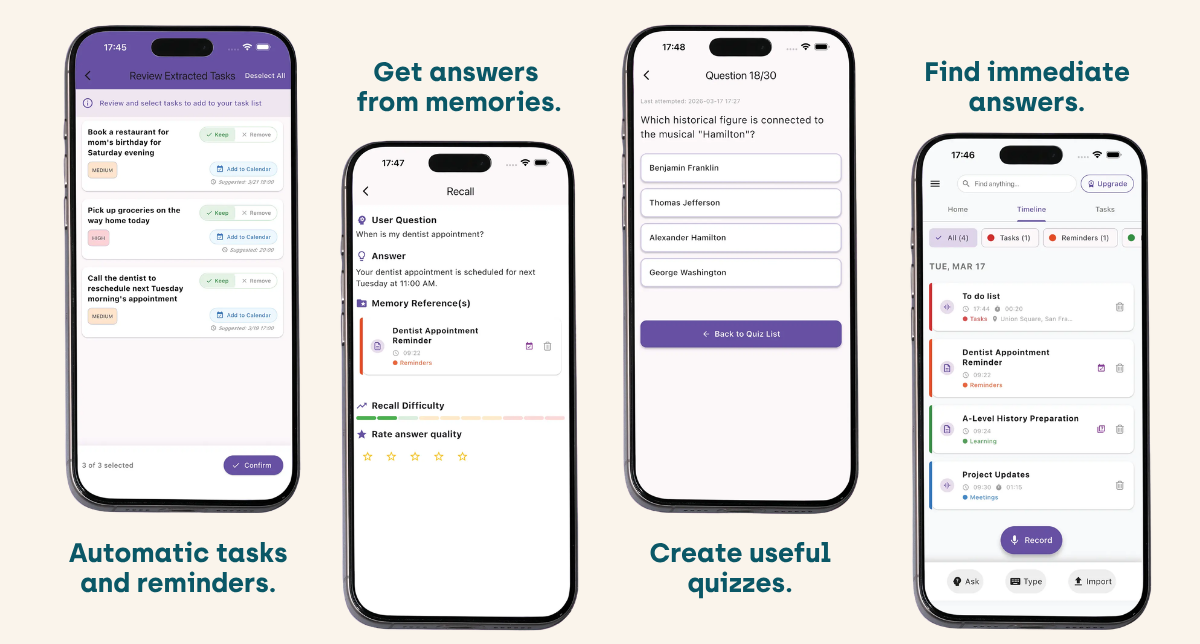
Insight into the benefits of using Recallify and what the application offers.
Why is this work important?
Memory difficulties affect many people following a brain injury and can have a significant impact on confidence, independence and quality of life. Remembering conversations, appointments or important information can become challenging, affecting relationships, work and everyday activities.
Artificial intelligence (AI) offers new opportunities to support memory, but digital tools must be easy to use, trusted by users and designed around real-life experiences if they are to become part of everyday care.
The HRC BI recognised the importance of involving patients and carers from the earliest stages of development to ensure Recallify addressed genuine user needs rather than assumed ones.
By bringing together innovators with people who have lived experience of memory impairment, HRC BI helped generate practical insights that strengthened the technology and informed its future evaluation. Without this early engagement, important usability issues and opportunities for improvement may have been missed.
How is the NIHR HealthTech Research Centre: Brain Injury helping to tackle this challenge?
Following Recallify's success at the 2024 UKABIF Summit, HRC BI supported the next stage of development by leading a programme of PPIE activities.
Drawing on its register of patients and carers with lived experience of brain injury, the team recruited 13 participants to test the app in their daily lives before taking part in facilitated online workshops. Each session was 1 hour long, with the first focused on the design and usability of the app, and the second focused on presentation of information for new users.
The sessions explored how people used the technology, what they found valuable, and where improvements could be made. Feedback was gathered on accessibility, privacy and functionality before being shared directly with the developers to inform future software development.
As the platform continued to evolve, HRC BI provided further support by undertaking additional usability work and assisting with recruitment for a feasibility and acceptability study.
The first PPIE session for the latest study was run by the brain HRC in February 2026 and focused on gaining feedback on the participant onboarding materials and study design.
This collaborative approach ensured that patient experience remained central throughout product development.
What progress has the project made to date, and what outcomes have been achieved?
The workshops demonstrated that Recallify addressed an important unmet need for people living with memory difficulties.
Participants reported that the app effectively summarised conversations and events, helping them organise information and support everyday memory. 100% of participants said they found the app useful and would continue using it as part of their daily lives.

Quote from a PPIE workshop contributor following app testing.
Importantly, the evaluation also identified several opportunities for improvement that directly influenced product development.
Participants highlighted the importance of making privacy information more visible and easier to understand. Following this feedback, the developers revised the app's privacy statement and reviewed consent processes with experts.
Users also suggested introducing the ability to upload external audio recordings so they could benefit from the app's AI-powered summarising capabilities across more aspects of daily life. This feature is now in development.
For the development of the feasibility study, the PPIE provided valuable feedback on the accessibility, usability, and acceptability of the Recallify intervention and study procedures.
Participants highlighted the importance of ensuring that materials were accessible for individuals with cognitive and memory difficulties, including the use of appropriate colour schemes, captions, and clear instructions.
They also suggested that regular contact with the research team would help maintain engagement and support study retention. Members also proposed more comprehensive support for participants learning to use the app, including a step-by-step guide and tutorial video.
In response to this feedback, several changes were implemented prior to study launch. Participant-facing materials were reviewed and updated to improve accessibility and readability. Weekly support and coaching sessions were incorporated into the study design to provide participants with regular opportunities to ask questions, troubleshoot difficulties, and maintain engagement with the intervention.
In addition, a step-by-step Recallify tutorial video was produced and made available on YouTube, enabling participants to access clear guidance on downloading, setting up, and using the app throughout the study. These changes helped ensure that the intervention and study procedures were more accessible, user-friendly, and responsive to participant needs.
What has the HealthTech Research Centre learned, and where do we go from here?
This project demonstrates the value of involving patients and carers at the earliest stages of digital health innovation. Rather than simply testing whether the app worked, HRC BI helped identify how it could work better for the people it is designed to support. Feedback from participants directly informed software development, leading to improvements in privacy, usability and future functionality.
The innovators recognised the impact of this collaborative approach, commenting:
"A massive thanks to the NIHR HRC: Brain injury for running two PPIE sessions for us. These have helped us ensure the patient voice throughout the App development and into feasibility trials.
It has directly supported our ability to apply for NIHR grants. Also a big thank you to James (NIHR HRC: Brain injury PPIE Lead) for his extensive experience and guidance in running these sessions, which have been invaluable. "
The project also reinforced that no two experiences of memory impairment are the same. Every participant contributed unique insights that strengthened the design of the technology and highlighted the importance of testing digital innovations with diverse groups of users.
Beyond the initial workshops, the HRC continues to support the innovation by recruiting participants for larger studies, helping generate the evidence needed to progress the technology towards wider adoption. This work aligns with NHS priorities around personalised care, digital innovation and co-production, demonstrating how meaningful patient involvement can accelerate the development of technologies that are both effective and acceptable in real-world settings.
Who helped make this work possible?
This project is a collaboration between the NIHR HealthTech Research Centre: Brain Injury and Recallify, an AI-powered digital health company developing technologies to support people living with memory impairment.
By connecting innovators with people who have lived experience, the team helps ensure promising technologies are shaped by the people they are intended to benefit, strengthening their potential for successful adoption within health and care services.