

The HeathTech Research Centre in Sustainable Innovation at Exeter, Royal Devon Hospital has supported the development of an innovative platform providing online learning combined with coaching support via email, video and/or phone calls called CareCoach.
The HRC in Sustainable Innovation has supported CareCoach by feeding into study design and real-world implementation, providing research support, linking to NHS recruitment pathways, as well as commercialisation and promotion via the Health Innovation Network, and access to a wider health innovation ecosystem.
CareCoach has been a lifeline for John Desmond, who cares for his wife Linda, providing a sense of community. Linda was diagnosed with semantic dementia in 2021 at 67 years old. Semantic dementia, also known as frontotemporal dementia, is a rare form of the condition that affects Linda's ability to use and understand words. Linda was working as a pharmacist in 2018 when she first noticed the changes in herself that weren’t obvious to other people, including John.
CareCoach, funded by the National Institute for Health and Care Research (NIHR), is an online resource which is looking to see if use has an effect on a carer's sense of being able to care well, their mood and quality of life.
Recruitment to the CareCoach study opened in April 2025 and 249 participants have been enrolled so far. They aim to recruit 404 family carers living in the UK. John was able to participate from the comfort of his own home and could fit it around his schedule.
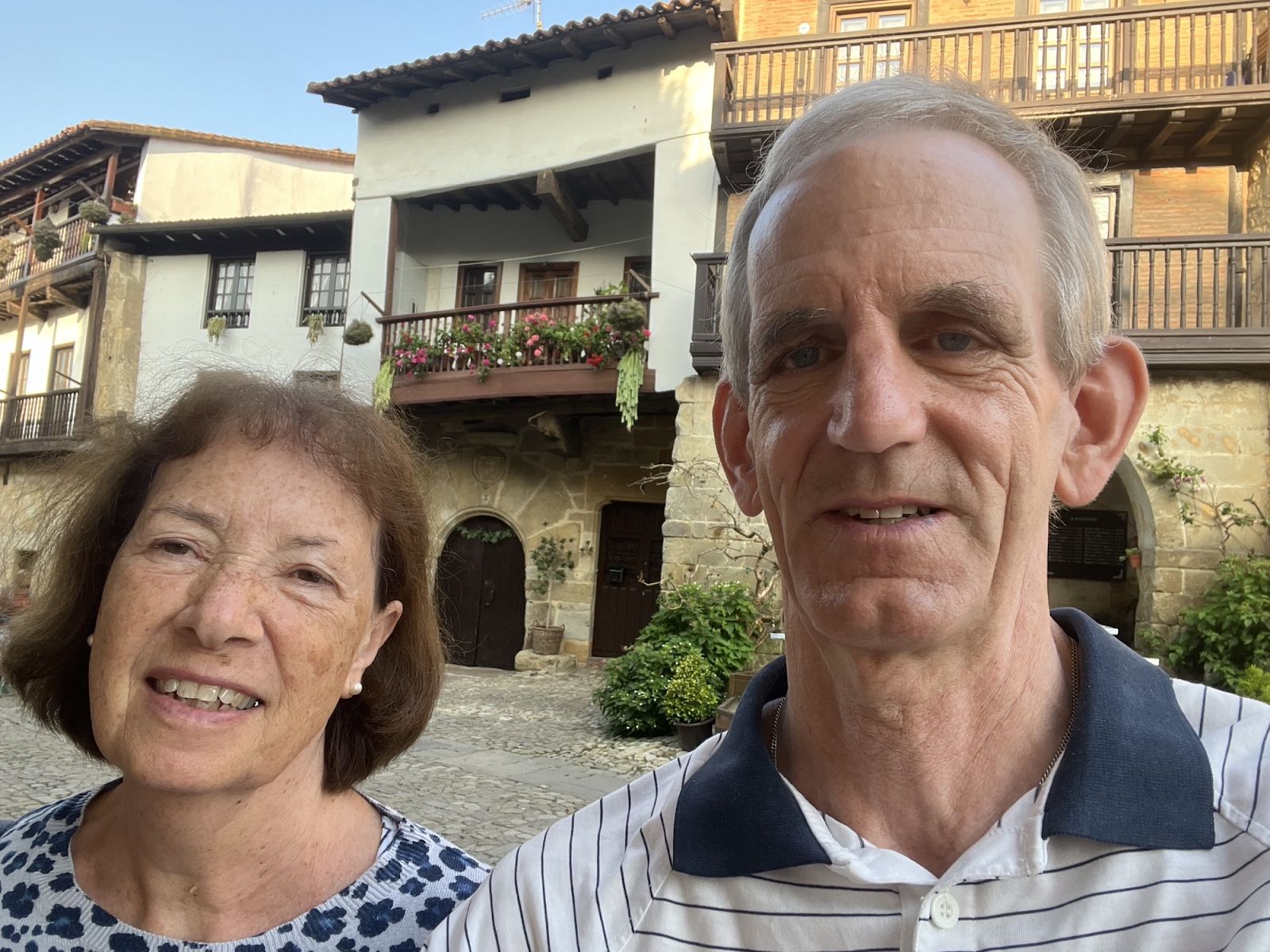
Carers like John (pictured with his wife Linda below) are randomly allocated to either the CareCoach intervention group or the 'control' group where they will continue to receive usual care. The intervention (CareCoach) combines learning modules (via an online platform) with support from a ‘coach’ (eg., health/social care worker) remotely.
All carers in the study are asked to complete a questionnaire either online or via post at the beginning of the trial (before being allocated into a group), and 10-weeks and 6-months after allocation.
John was placed in the intervention group and while he didn't find specific answers about semantic dementia, which he had hoped, he found the CareCoach package gave him a sense of community and a new perspective.
John shared that “The course itself has been very good in terms of presenting people in various situations where their partner has dementia. So that's really quite useful, the ideas they come out with and the problems they face.”
“The examples were lengthy and you got a real insight into other people's problems and they spoke pretty fully on all aspects of their experiences. So that's a definite bonus on the course.”
The coaching sessions provided John with a safe space to reflect and think about different tools and techniques.
John got involved via the Join Dementia Research initiative which enables people to register their interest in participating in dementia research to be matched to suitable studies. Join Dementia Research is operated by the NIHR in partnership with Alzheimer Scotland and will celebrate its 11th birthday on 24 February this year.
John is encouraging others to take part in research: “I would say you've got nothing to lose for a start. It is worthwhile making yourself aware of other people in a similar situation and the fact that they, having gone through those experiences, have got a lot to offer. Even if the degree of dementia in the person you're caring for is different, there are aspects that are similar. And there is a real focus on you as a carer.”
By participating in studies like CareCoach, John has helped researchers understand what carers need, which will ultimately help others in the future. The findings from this work will be important to understanding all carer interventions in dementia and to date has not been established using an online intervention (such as CareCoach).
Professor Chris Fox, Co-Chief Investigator for CareCoach and Senior Investigator for our HRC in Sustainable innovation said: “Helping family carers is very important – not only for their wellbeing but also has benefits for the person living with dementia. Despite innovations in biomarkers and new medicines, they remain limited, making family support an ongoing priority. No one should be left behind.”
To find out more about how HealthTech Research Centres support innovations like this, contact us.
Read more about John’s story here: John's story: Finding carer support through dementia research
For more information contact Sarah Jones, Communications Officer, NIHR South West Central Regional Research Delivery Network.
CareCoach study:
If you care or support a person living with dementia and are interested in taking part inCareCoach, please email