


Written by Nathaniel Mills, Chief Operating Officer at the NIHR HealthTech Research Centre Network.
A couple of weeks on from NHS ConfedExpo, I have had some time to reflect on the conversations we had in Manchester.
As ever, it was encouraging to see so many companies, NHS organisations and colleagues thinking seriously about what good looks like for HealthTech innovation. There was a lot of enthusiasm, but also a growing focus on the practical questions: how technologies are evaluated, how evidence is generated, and what it takes to move from a promising idea to something that can be adopted at scale.
The HealthTech Research Centre (HRC) Network stand was busy throughout the event, and I was proud of the team who represented the Network and the wider HRCs. We had conversations covering everything from research infrastructure and evidence generation to adoption pathways and implementation challenges. Those discussions reflected the breadth of expertise available across the HRCs and the role they play in helping companies develop technologies that are fit for real-world use.
Being located next to the Health Innovation Network (HIN) stand worked particularly well. HRCs and HINs do different jobs, but they're complementary. Having both organisations in the same space meant companies could get a more joined-up view of the support available, rather than trying to navigate the landscape one conversation at a time.
One theme that kept coming up was AI. The level of interest is understandable, and there are some genuinely exciting developments happening. At times, though, it reminded me of the "there's an app for that" moment from 10 or 15 years ago, when mobile technology was expected to solve almost every problem.
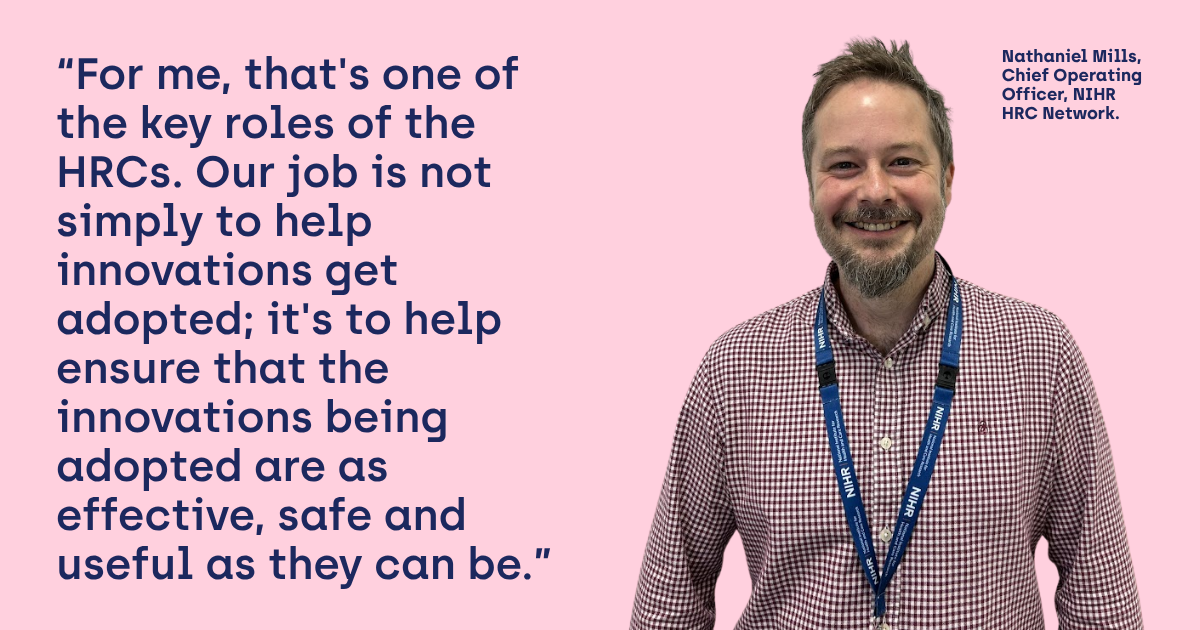
The potential of AI is real, but potential on its own isn't enough. If these technologies are going to improve patient care, support NHS staff and deliver lasting value, they need to be developed and evaluated properly. That's challenging in a field that moves as quickly as AI does, but it makes the need for robust evidence and effective evaluation more important, not less.
Looking ahead, the direction of travel set out through the Life Sciences Sector Plan and the National Institute for Health and Care Research (NIHR)’s increasing focus on industry engagement presents a real opportunity. By the time ConfedExpo comes around again, I'd like to see even more of the wider NIHR research infrastructure involved in these conversations. Companies often need access to a broader research ecosystem alongside HealthTech expertise, and there is value in making those connections easier to find and navigate.
Since the event, the Network team and our HRC colleagues have been busy following up on the conversations that started in Manchester. Among the companies we spoke to were some genuinely impressive innovators tackling important challenges. Helping them access the right expertise and support at the right stage is exactly what the Network is there to do.
The UK has a strong HealthTech ecosystem, with expertise across research, evaluation, adoption and implementation. The challenge, and opportunity, is making sure that promising innovations get the support they need to realise their potential and deliver benefits for patients, the NHS and beyond.