

What do young people across the country know about brain injury and the role that technology can play in improving care?
In November 2025, the NIHR HealthTech Research Centre in Brain Injury (HRC BI) wanted to start more conversations around this area, targeting students, to increase their knowledge around the topic. As part of its public engagement programme, the HRC BI team developed an illustrated talk for sixth-form students, introducing them to brain injury research and some of the technologies being developed to address challenges across the care pathway.
Working with Education in Action, a nationwide schools programme, the HRC delivered five talks to approximately 3,000 students, from 100 schools across 35 towns and cities in England. While these sessions focused on brain injuries and their effects, they also introduced the young people to the range of careers available across the medical technology sector, encouraging them to find out more about diverse job roles available within this focus area.
Why is this work important?
Brain injuries can affect people for the rest of their life. Understanding their causes, knowing how injuries can be prevented and recognising the role of early treatment are all important, but these subjects are often talked less about across the younger generations.
The HRC BI team saw an opportunity to change that by taking brain injury research beyond hospitals and universities and into schools.
Sixth-form students were a particularly important audience. At this stage in their lives, they’re often considering the next steps for their careers and so highlighting options across medicine, science and engineering fields is important to encourage them to explore career development opportunities in this sector. Talking to them about different types of HealthTech also helped them visualise and understand how research is translated into real-word solutions, and the people who are needed to make this happen.
The team also spoke with students to explore their understanding of the prevalence and causes of brain injury.
How is the NIHR HealthTech Research Centre: Brain Injury helping to tackle this challenge?
Public engagement is an important part of the HRC BI team’s work. The HRC BI team follows the National Coordinating Centre for Public Engagement's (NCCPE) Framework for High Quality Engagement which shapes the planning, delivery and evaluation phases of these activities.
These sessions were designed and delivered by James Piercy, the HRC BI Patient and Public Involvement and Engagement (PPIE) Lead. James developed an engaging presentation specifically designed for the student demographic, considering which examples of technologies they might be the most interested in, and ensuring a broad range across the brain injury care pathway was included to capture variety. Using illustrated design and video, students could really visualise the research, bringing it to life in an exciting and interactive format.
The talk featured a number of research projects and tech including:
Cortirio a portable brain imaging tool, Crainio a non-invasive tool for measuring the pressure inside a patient's head, fUSiON a study monitoring the brains of preterm babies using Infrared light and ultrasound and Recallify, a memory support app.
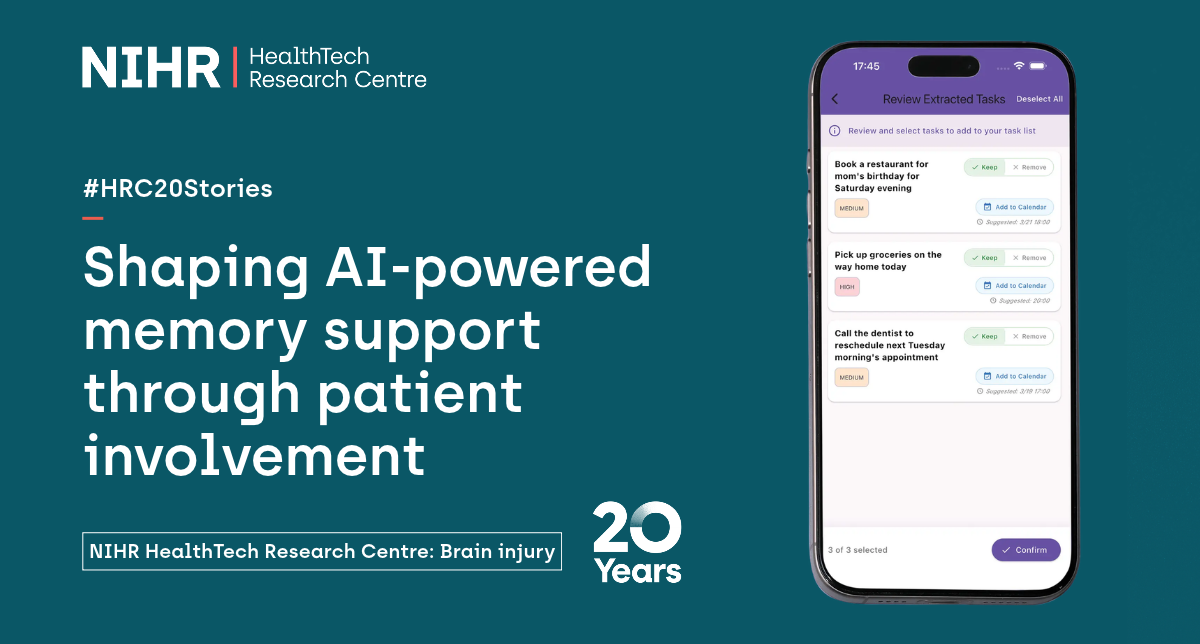
You can read more about how HRC BI supported Recallify here.
Partnering with Education in Action meant that HRC BI could access an established school network, allowing the team to connect with students across a wide range of towns and cities, who attended events in Manchester, Coventry and London.
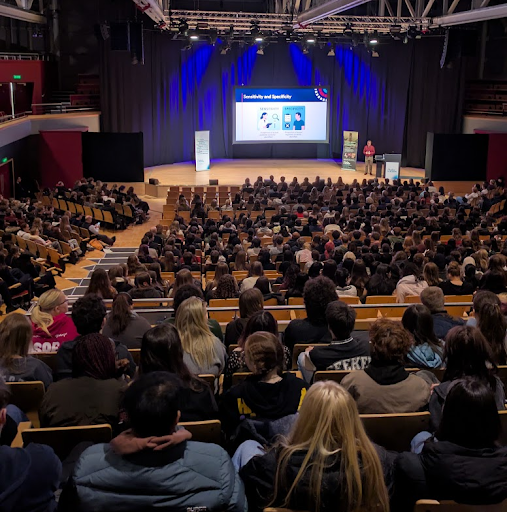
James delivering a presentation to sixth form students as part of a series of five sessions.
What progress has the project made to date, and what outcomes have been achieved?
So far, the five talks have reached around 3,000 students from 100 schools across 35 towns and cities in England. Session feedback has been particularly positive across students, teachers and event organisers, detailing that the discussions were informative and relevant, especially for those interested in pursuing healthcare and science careers in the near future.
One teacher commented:
“Very informative with great links to different careers.”
Another described the presentation as:
“Brilliant. Particularly of interest to students interested in medicine/healthcare.”
Students were equally approving of the opportunity to learn about current developments in the field. One commented:
“The sheer number of startups that were mentioned served as a reminder that medicine is constantly evolving, and how technology can be used to create innovative solutions to various brain injuries.”
What has the HRC learned, and where do we go from here?
The initial five sessions have been a great opportunity for the HRC BI to expand its usual reach (research and healthcare colleagues) and explore communicating with new audiences and students getting an introduction to brain injuries, the research happening behind them in real-time and how these can improve care for those who need it the most.
Feedback from the sessions was encouraging. Teachers commented on the links to the school curriculum and the different healthcare careers covered, while students picked up on the range of new technologies and their potential uses in medicine.
Using the Equity Compass model, the HRC BI analysed the inclusivity of each session to note what could be improved for future sessions.
One challenge was that although the schools network allowed HRC BI to reach students across different geographical areas, detailed information about specific audience demographics wasn't available.
The review also suggested that for future talks, it’s important to make sure images and case studies demonstrate a wider range of the people involved in HealthTech research and development. These suggestions have been taken into account by the HRC BI team, ensuring they consider a broader range representation as well as reach for future sessions.
Next steps
HRC BI is planning to revisit another series of schools in 2027/28, this time tailoring content based around their prevention and education theme. This involves:
-
Primary prevention - increasing the knowledge of the causes of long-term acquired brain injuries and educating communities working with at-risk groups on how to prevent them.
-
Secondary prevention - improving screening and diagnosis of ABI to increase early intervention and reduce long-term brain injury.
-
Tertiary prevention - improving the ability to identify individuals experiencing ABI in the community and improve access to care services for those with brain injury.
The next cohort of sessions will build on the experience of the first, continuing to raise awareness of brain injury and the work taking place across the HealthTech landscape to prevent future injuries and improve care pathways.
Who helped make this work possible?
James Piercy, the HRC's PPIE lead, developed the talk, selecting technologies from across the brain injury pathway to give students an insight into current research and innovation. Innovators were also contacted to provide information and images of their developments.
Education in Action supported HRC BI to reach its audiences and arrange sessions across England.
Teachers, students and event organisers provided feedback on the sessions, allowing the HRC BI team to understand what was received as the most engaging and how they can further develop talks to enhance future presentations.