

Executive summary
Heavy menstrual bleeding (HMB) affects 1 in 3 women and is a leading cause of gynaecology referrals in the UK. Despite this, many women experience significant delays in diagnosis, with over half waiting more than a year and some over a decade. These delays can lead to serious health consequences, reduced quality of life, and an estimated £4.7 billion annual cost to the UK economy.
A key barrier to improving care is the lack of objective tools to measure menstrual blood loss, with current pathways relying heavily on self-reported symptoms. This limits clinicians’ ability to diagnose and monitor the condition effectively.
The NIHR HealthTech Research Centre in Long-term conditions, Devices for Dignity (HRC LTC), have supported early-stage research to explore how smart menstrual health technology, developed by Emm, could address this gap. Through patient and clinician engagement, the team is generating critical insights to inform product development, clinical integration, and potential system impact.
This work is laying the foundations for a more accurate, efficient, and patient-centred care pathway for HMB, aligned with national priorities in women’s health.
Clear purpose and why
Heavy menstrual bleeding remains under-recognised and underdiagnosed, despite its high prevalence and impact. Social stigma, normalisation of symptoms, and limited clinical tools contribute to delays in diagnosis and treatment, leaving many women without appropriate care.
At the centre of the challenge is the absence of an objective and reliable way to measure menstrual blood loss. Without this, clinicians lack a clear benchmark to guide decision-making, and patients often struggle to communicate the severity of their symptoms.
This ongoing work is investigating whether smart menstrual health technology could offer a practical solution by enabling objective measurement and supporting earlier, more accurate diagnosis.
HRC LTC are playing a critical role in this early-stage research by bringing together patients and clinicians with innovators to ensure that proposed solutions are grounded in real-world need and aligned with NHS priorities.
Without this work, there is a risk that innovations in this space will not reflect patient experience or clinical reality, limiting their potential for adoption and impact.
Over the coming months, interview feedback is expected to provide Emm with clear guidance on whether to progress into the HMB pathway or consider a more suitable alternative within healthcare.
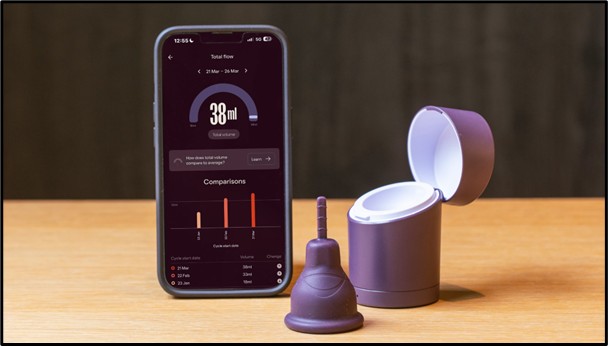
Automated period cycle data through the use of a digital application, accessible at any time.
Approach
This HRC LTC study is exploring how smart menstrual health technology could transform the HMB care pathway, with a strong focus on understanding user needs, clinical value, and potential barriers to adoption.
HRC LTC is leading patient and clinician engagement, including recruitment and facilitation of interviews and workshops. Participants include women with lived experience of HMB, community groups, and healthcare professionals.
To date, 30 patients across South Yorkshire and 8 clinicians nationwide have taken part in these interviews. The sessions explored topics such as patients’ experiences of heavy periods, whether and how they track their menstrual cycles, their experiences of period pain and other menstrual health conditions, and the challenges they have faced with diagnosis and treatment. Participants are also asked for their views on Emm and how it could fit into their lives, care journeys, and the management of heavy periods.
Clinicians are providing insight into where such a tool could add value, how it might support decision-making, and what would be required for integration into practice.
The insights generated so far have been used to identify key areas for further investigation. Partners, including York Health Economics Consortium, are using this data to undertake early health economic modelling to assess potential value for the NHS and inform future development.
This approach ensures that innovation is shaped by those who will use and deliver it, reducing risk and supporting a clearer pathway toward adoption.
Quote from HRC LTC’s Interview Facilitator on the Emm project.
Findings
Early findings from patient and clinician engagement stressed improvements are needed within the HMB care pathway.
Patients consistently reported frustration with delays in diagnosis, a lack of validation of their symptoms, and difficulty communicating the severity of their condition.
Clinicians recognised the limitations of current approaches and identified potential value in having access to quantifiable data to support diagnosis, monitor treatment effectiveness, and guide clinical decision-making.
The study has also identified important considerations for clinical adoption, including usability, acceptability, and how such a technology could be integrated into existing care pathways. For example, this includes exploring any differing views on the size of the applicator, as well as whether the app is perceived to add extra effort rather than being sufficiently automated, and therefore whether it represents a sustainable practice for users to maintain over time.
Insights and impact
While this work is at an early stage, it has demonstrated important system-level impact by shaping the direction of innovation and reducing uncertainty around adoption.
For patients, the potential impact is significant. The tool could support earlier diagnosis, reduce uncertainty, and improve confidence that symptoms are being taken seriously. In simple terms, this could mean women being diagnosed faster and receiving appropriate treatment sooner. For clinicians, access to reliable data could support more informed decision-making, improving the accuracy of diagnosis and the ability to monitor treatment outcomes.
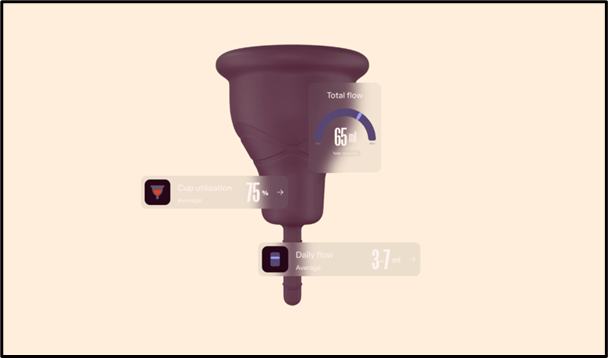
Automated period and cycle data, combined with flow volume, for Emmpersonal, precise and measurable baseline insights.
At a system level, a more efficient care pathway with fewer appointments required could reduce delays, improve patient experience, and lower costs associated with repeated consultations, misdiagnosis, and complications. Early health economic modelling suggests there is potential for significant cost savings within the NHS.
The work also aligns with the UK Government’s three strategic shifts, particularly the move towards greater use of digital technology, more care delivered closer to home, and a stronger focus on prevention and early intervention.
HRC LTC has enabled this impact by acting as a bridge between innovators, patients, and the healthcare system. By generating early evidence and identifying real-world needs, the HRC is helping to ensure that the technology is both relevant and implementable.
This positions the innovation for further development, evaluation, and potential adoption within the NHS. It underscores HRC LTC’s position to leverage expertise and maximise potential, supporting innovators with patient and public involvement and engagement (PPIE) across the ecosystem at every stage of the lifecycle.
Reflections
This case study highlights the importance of early-stage engagement in the development of HealthTech. By involving patients and clinicians from the outset, the project has been able to identify both opportunities and challenges before significant investment in development.
The role ofHRC LTC has been central in facilitating this process, ensuring that insights were captured systematically and translated into actionable recommendations.
A key learning is that addressing complex conditions such as HMB requires not only technological innovation, but also cultural change, including reducing stigma and improving awareness.
The next phase of the project will involve completing data analysis and producing a report to inform decision-making. A further workshop, led by Health Innovation East, will explore the findings in more depth and assess the potential need and value of the technology.
These outputs will directly inform Emm’s next steps, including decisions around product development, further research, and potential pathways to adoption.
Affiliations and links
This work was delivered in collaboration between the NIHR HealthTech Research Centre in Long-term conditions (HRC LTC) and innovation partner Emm.
HRC LTC has played, and will continue to play a central role in study design, participant recruitment, and delivery of patient and clinician engagement activities, ensuring that the research reflects real-world needs and supports future adoption.
Partners include Health Innovation East, who will support further stakeholder engagement and pathway exploration, and York Health Economics Consortium, who will undertake early health economic modelling.
Together, these partners are supporting the development of evidence needed to inform future innovation, evaluation, and potential integration into NHS care pathways.